
An Interview with Fr. Thomas Santa on Scrupulosity and Finding Grace
By Mira Riley
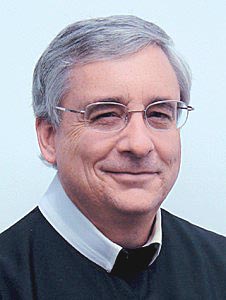
In recognition of October as OCD Awareness Month, we sat down with Fr. Thomas Santa, C.Ss.R., to explore a lesser-known but deeply challenging form of obsessive-compulsive disorder: scrupulosity, which involves religious and moral obsessions and compulsions. For more than 15 years, Fr. Tom has dedicated his ministry to supporting those navigating the spiritual and emotional challenges of scrupulosity.
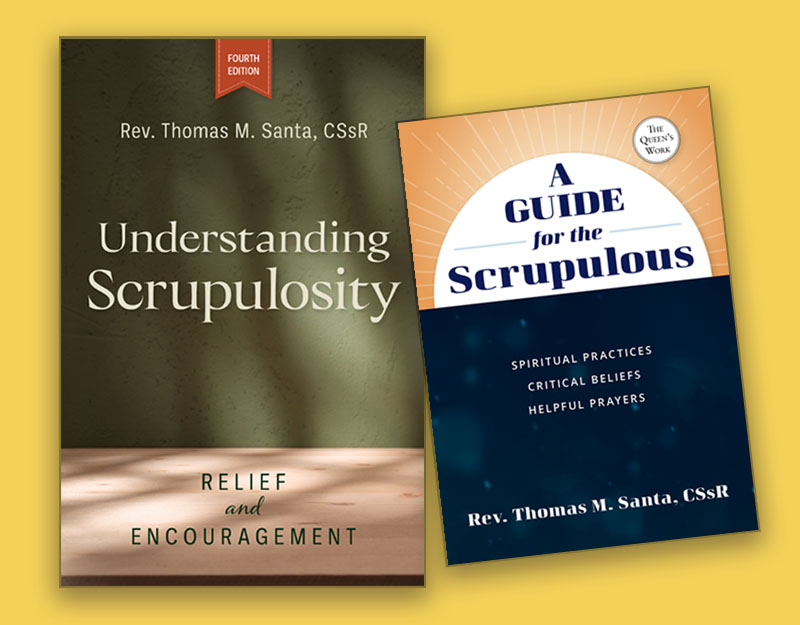
As the current president and publisher of Liguori Publications, Fr. Tom leads the Scrupulous Anonymous monthly newsletter and ManagingScrupulosity.com. He also serves as a consultant for the OCD Foundation and has published numerous books and articles to support those living with scrupulosity, as well as those seeking to better understand it.
In this interview, Fr. Tom shares the story of his vocational journey, unpacks common misconceptions about scrupulosity, and offers insight into finding grace amid the struggles of faith and mental health. Through his experience and compassionate perspective, he reminds us that even in moments of doubt and uncertainty, there is room for understanding, hope, and healing.
Father Tom, would you introduce yourself to our readers, and then walk us through your vocational journey. What drew you to the Redemptorists, and ultimately to priesthood?
I was born in Washington, DC, though most people believe I was born in Grand Rapids, Michigan. Our family moved to Grand Rapids when I was about three years old. I attended St. Alphonsus Parish, which was staffed by the Redemptorists. The Redemptorists were a constant presence in our family and our home. So, I learned to love them as individual people and men long before I learned to love them as Redemptorists.
They served an important role in our family. My father abandoned our family when I was about four years old, and so my mother was a single mother. My two sisters, my mother, and I were the ones who formed the nucleus of our family. The Redemptorists made sure that we were not abandoned and that we were cared for, beginning with Father Michaels and then Father Tom Landers. Father Bob Ulrich came later, followed by Father Chuck Beierwaltes, and the list just goes on and on. When I became ready to go to high school, it seemed to me that the best thing to do would be to follow in their footsteps.
I was just about ready to sign up for the Redemptorists when Father Mike Fish came to St. Alphonsus and gave a talk about being a missionary in Brazil. As soon as he was done, I went to see Father Ulrich, and I told him I was not going to be a Redemptorist because I did not want to go to Brazil. He said, “Not everybody goes on to foreign missions.” He said, “A lot of Redemptorists want to be foreign missionaries, but you don’t have to be a foreign missionary.”
I said, “Okay, as long as that’s clear, I don’t want to enter under false pretenses.”
So, off I went to the seminary, and I had a great time. We had a great class, and I enjoyed all the years that I was in formation. I was professed in 1973 and then ordained in 1978. My first assignment was to return to formation to teach, which I did for four years. I taught for one year at St. Joseph’s in Edgerton, Wisconsin, and it closed. I then went to St. Henry’s in Belleville, Illinois, to work with the Oblates and the Diocese of Belleville, which was a very nice experience.
In the midst of that, I received a call from the Provincial, and I was transferred to Wichita, Kansas, to work in retreat work, which was something I was very interested in doing. In fact, I was doing it in St. Louis at the Shrine of Our Lady of the Snows. So, given the opportunity to do retreat work full-time, I was very happy to do that. I spent a total of 12 years in Wichita and moved from a small retreat center to a very large retreat center, which I helped build, called Spiritual Life Center. It is still there to this day.
One day, I was sitting in my office at the Spiritual Life Center, and Father Jim Shea, who was Provincial, showed up. In Wichita, you just don’t show up. There’s a reason you came to Wichita. So, I said, “Father Shea, what do you want?”
He said, “Well, I would like you to become the president of Liguori Publications.” At that time, I was 38 years old, I believe. And I said, “Well, okay, I can do that.”
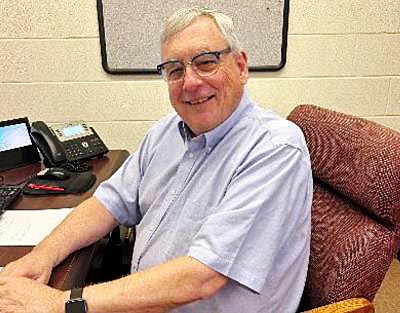
That started a journey that I never expected to have or experience in my life, which was a journey to become not only the president and publisher of a very large and significant publishing venture, but I also discovered that I could be a writer. I thought I might be able to write, but I didn’t know I could really write. Eighteen books later, hundreds of articles later, and God knows how much else, I suppose I am a writer now.
Anyways, I went to Liguori and worked there for nine years, and at that time, I was the longest-serving president and publisher of Liguori. After nine years, I was sent to Tucson, Arizona, to work in a retreat house. That was very fun, also. It was changed from Picture Rocks Retreat House to the Redemptorists Renewal Center in Tucson. We rebuilt it and started some major programs in spiritual direction, sabbaticals, and a bunch of other things. I served there for nine years and then became pastor at St. Michael’s in Chicago. I was also the pastor at St. Gerard’s Parish in Brooklyn Park. I left there and went to Grand Rapids, Michigan, to become the director of continuing education for the Redemptorists of the Denver Province, which we had never had before, and I did that for four years. We prepared all sorts of things, but then COVID hit. COVID made it impossible to do anything that we had planned.
So, then I started working full-time taking care of people who were scrupulous. It wasn’t that I had not done that before. I had, in fact, by that time already spent about 20 years writing for the scrupulous and doing retreats and things like that. However, this was the first time I was able to enter into a ministry of speaking to scrupulous people from point to point and day to day. During the period of COVID, I had about five appointments a day and developed quite a clientele.
I was appointed to go back to Liguori Publications. So, now I’m back at Liguori. I’ve been here for three years, again as president and publisher. I continue to write and continue to minister to the scrupulous.
I ended my face-to-face discernment and spiritual direction with the scrupulous about four months ago. I just have to acknowledge the fact that I can’t do everything anymore.
So, that brings me up to date. I work here now in a very vibrant apostolate, and I’m having a great time. At the same time, I’ve just released a brand-new book on scrupulosity called A Confessor’s Companion: Tender Conscience and Scrupulosity, which is a handbook for confessors.
Thanks to a generous donation from a donor, I recently sent that book to every bishop in the United States for their consideration. I am hoping that they’ll get the book and distribute it to their priests so that the scrupulous will be helped.
I never would have been able to write that book if it weren’t for COVID and those five years of spiritual direction. I thought I knew something about scrupulosity, but I didn’t. But after five years of spiritual direction and counseling, I pretty much know it very well.
So, there it is, in a nutshell.
For someone who may be hearing the term for the first time, how would you explain what scrupulosity is?
I’ll explain it to you: It’s two different things.
The traditional understanding of scrupulosity, which is what most pastors and priests have because it’s what they’ve been taught in the seminary. It’s what the saints talk about: a tender conscience. It’s the inability to distinguish between venial sin and mortal sin.
The traditional remedy for a tender conscience is a single confessor who guides you catechetically to the point where you learn how to discern between what is right and wrong, what is good and bad.
That is what scrupulosity is for most people. There are people who suffer that type of scrupulosity. St. Teresa of Lisieux comes to mind. St. Ignatius of Loyola comes to mind. There are people who suffered from that type of scrupulosity. With a single confessor and good catechetical training, you can turn the person around.
The second kind of scrupulosity is scrupulosity as a manifestation of obsessive-compulsive disorder. So, it’s obsessive-compulsive choices and decisions. That’s a disorder that manifests itself primarily around religion. People who have OCD can have obsessive compulsions about anything. You know, literally anything.
Most commonly, it’s germs or something like that. But every once in a while, it centers on moral issues and, in particular, religious issues. For Catholics, it’s a smorgasbord of concern because, as you know, Catholic doctrine and the system of sin are very well developed.
So, for a person who suffers from OCD-related scrupulosity, it’s pure torment, absolute total torment. If they go to a confessor who thinks he’s dealing with scrupulosity in the traditional sense, all he does is make it worse.
He doesn’t know he’s making it worse. He thinks he’s helping, but he makes it worse because all he does is reassure them that there’s no sin, that they’re okay, that, you know, they should take a breath, get over this, and practice something else. But they’re not getting to the root of it. The root of obsessive-compulsive disorder with the manifestation of scrupulosity is primarily an anxiety disorder. The anxiety is not only real but debilitating. So, telling someone to get over it or reassuring them that they’re okay does little or no good when it comes to anxiety. With anxiety, you need not only spiritual direction that’s centered and focused, but also counseling from an expert in OCD. And more often than not, you need prescription medicine to give you a fighting chance against the disorder.
Some saints who suffered from OCD-related scrupulosity include our own St. Alphonsus Liguori, who suffered so badly from it that he’s pictured with his head rubbed into his chest, and that’s because of anxiety and worry. I once said that to a group of Redemptorists, and they were not happy with me for saying it. But I have no doubt in my mind whatsoever that he suffered from obsessive-compulsive disorder.
So, anyways, I work primarily with people with obsessive-compulsive disorder. I’m a consultant to the OCD Foundation, and I also consult with a couple of different therapists and some medical doctors.
How has walking alongside people who struggle with scrupulosity and OCD deepened your own understanding of God’s mercy?
It hasn’t, to be blunt. It hasn’t deepened my experience of God’s mercy because I don’t think my experience of God’s mercy could get any deeper than the Redemptorist charism.
With Him, there is plentiful redemption for all. How do you improve on that?
What it has done, however, is change, and I would say radically change, my perception of sin and the Church’s moral teaching about sin.
I get particularly upset when I hear people, even good-hearted people and priests, for instance, throw around the word “mortal sin” so casually.
As if it’s something like walking into a grocery store and finding mortal sin on the grocery shelves. No, mortal sin is extremely difficult to commit, and the effects of mortal sin are horrific.
You know, when somebody says, “I committed a mortal sin,” and you ask them what they did, they say, “Well, I had an impure thought, but I entertained that impure thought, so I know I committed a mortal sin.”
No, you didn’t. You committed nothing; you had a human action. It’s called eroticism; it’s called sexuality. That is not a sin, okay?
You didn’t entertain it. In fact, you fought it, so don’t tell me you entertained it. And second of all, even if you did entertain it, do you really believe that God is going to send you to hell for all eternity because you have this particular sin, if you want to call it a sin?
They’ll think about it, and they’ll say, “But it felt so real.” I say, “I’m not saying that the anxiety isn’t real. The anxiety is 100% real, and it’s 100% serious.”
But just because you have anxiety doesn’t mean that you committed a sin, you know. So, let’s separate the two of them and deal with the anxiety, understanding that when you’re using big theological words, you’re just describing the level of your anxiety, you know?
For all scrupulous people, the main thing at the root of their scrupulosity is trauma. The trauma is that they are convinced that they did something that deserves eternal damnation and that there’s nothing they can do to fix it. You know? And so, when you give them a way out, they’ll say, “Yes, but what if you’re wrong? I’m not going to risk eternal damnation because you could be wrong. So, I’m going to suffer this way because I don’t want to be wrong.”
You can see what a trap that would be. Just terrible.
Can you imagine the fear? Could you imagine living your life convinced that you did something terrible, so terrible that God cannot forgive it, and you’re going to burn in hell forever, and there’s nothing you can do about it? And anytime you think about it, you get anxious. So, you’re convinced it’s true because you feel anxious. It’s a terrible disease.
You can get out of it; you can manage your way out of it, but it’s not easy. You need a therapist, a spiritual director who knows what they’re doing, and you need prescription medicine. A lot of people will fight all those things. They’ll say, “This is a cross that God gave me.” No, it’s not a cross that God gave you.
With therapy, there are two basic types that help people with obsessive-compulsive disorder.
One is called ERP, or exposure and response prevention. That’s the standard, or has been the standard for a long time. The easiest way to describe it: You’re afraid of elevators, so the therapist brings you to an elevator and makes you go up and down, up and down, up and down, until you’re no longer afraid of it. You expose yourself, you respond, and then you prevent the response to the exposure. That’s number one.
The other one that’s coming more into use is called ICBT: inference-based cognitive behavioral therapy. I prefer ICBT over ERP because ICBT gives a person a chance to rewrite their story and their understanding. It gives them the tools to do that.
ERP is very, very hard if your primary fear is that you’re going to go to hell. What does ERP do? It can bring you so far, but it can’t bring you face-to-face with that fear, that reality. It can’t say, “Here’s hell: go in it, come out of it, go in it, come out.” It can’t do that.
ICBT can be very, very helpful there. Needless to say, both of them are just helps, both of them are good helps, but they’re just helps.
If you have scrupulosity, you’re going to have it for life, but you can manage it.
After all these years as a priest and Redemptorist, what is one thing you wish people understood more deeply about God’s love, mercy, and plentiful redemption?
I can’t think of a better way than looking at our charism, our stated charism: “With Him, there is plentiful redemption.” Redemptorists, and I think Redemptorists need to believe it, need to announce good news. They need to adapt the way Alphonsus did it, even with OCD and everything. What Alphonsus did was, when he was faced with something, his question wasn’t, “How bad is this person?” or “What do I need to do to stop it?” His question was, “There is grace in this moment somewhere.” I’ve got to find the grace. I think that’s what should really animate Redemptorists.
There is grace somewhere in here, and I need to find the grace. Once you find the grace, then you can help people understand how they can make that grace grow as they connect more and more with it. If you just tell people they’re bad or they need to stop a behavior, that’s not positive. Announce what’s good news first, not what’s bad news or troubling news or difficult news. Announce the good news and then help them embrace the bigger picture.
____
Thank you for joining us “At the Table” with Fr. Tom Santa. For more information on scrupulosity and OCD, please visit managingscrupulosity.com and https://iocdf.org/ .
